Harmony
Harmony is the composite product when individual musical voices group together to form a cohesive whole. Simply, harmony is the sound of two or more notes sounded simultaneously. Think of an orchestra: the flute player may be playing one note, the violinist playing a different note, and the trombonist playing yet another note. But when their individual parts are heard together, harmony is created.
Chord
A chord is the layering of several tones played or sung simultaneously - usually superposed thirds. Chords are defined by their root notes and their quality (major, minor, 7th) and eventually by their inversion.
Triads
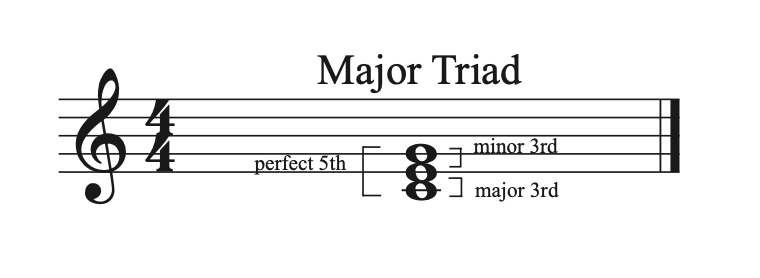
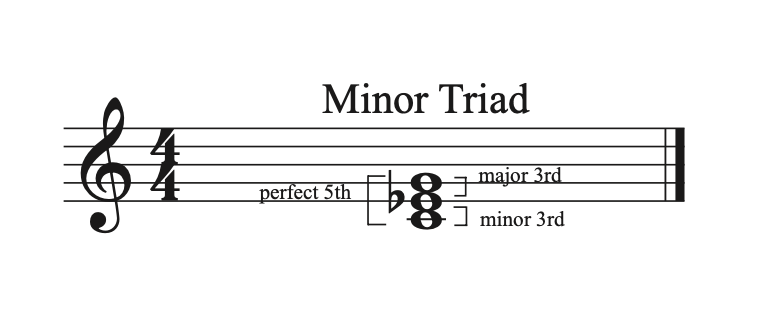
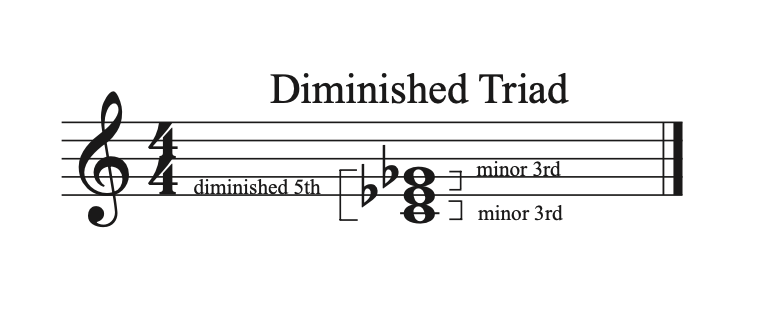
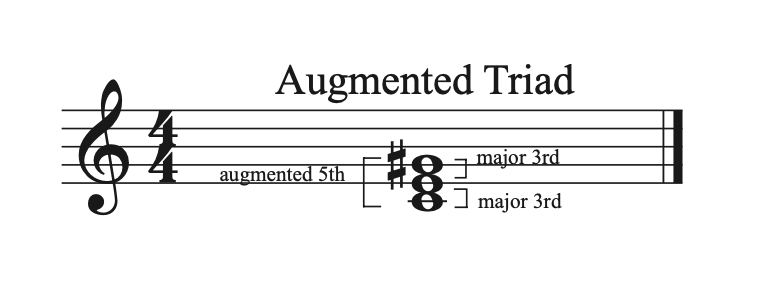
A triad is a chord made of three notes. It consists of a root and the third and the fifth above it. The most common triads are as follows:
Major - has a major third and a perfect fifth
Minor - has a minor third and a perfect fifth
Diminished - has a minor third and a diminished fifth
Augmented - has a major third and an augmented fifth
7th Chords
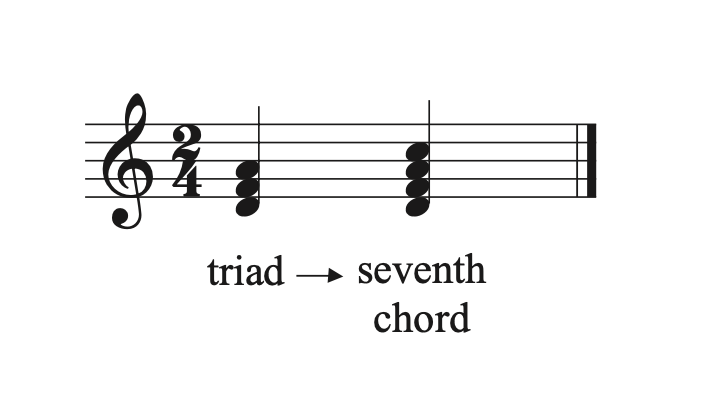
These chords are triads with a supplementary diatonic third superposed. The most common 7th chords are as follows:
Dominant 7th Chord - a major triad with a minor 7th added
Minor - a minor triad with a minor 7th added
Diminished - a diminished triad with a diminished 7th added
Half-Diminished - a diminished triad with a minor 7th added
How Is Harmony Represented in Music?
Harmony is typically analyzed as a series of chords. In an orchestra, the flute player plays a high A, the violinist bows a C#, and the trombonist sustains an F#. Together, these three notes comprise an F# minor chord.
Consonant Chord - when all the instruments in an ensemble are playing notes that fit the same chord and “sound good” together.
Dissonant Chord - combinations of notes that sound jarring or wrong and do not fit the chord structure. For example, when the string section of the orchestra plays a melodic line that does not fit with a set chord that consists of a D major triad while the oboe plays a Bb, this combination of sounds is known as a dissonant chord.
Chord Progression
In a musical composition, a chord progression or harmonic progression (can be referred to as chord changes) in a succession of chords. Chord progressions are the defining feature on which melody and rhythm are built. In tonal music, chord progressions have the function of establishing a tonality (key center).
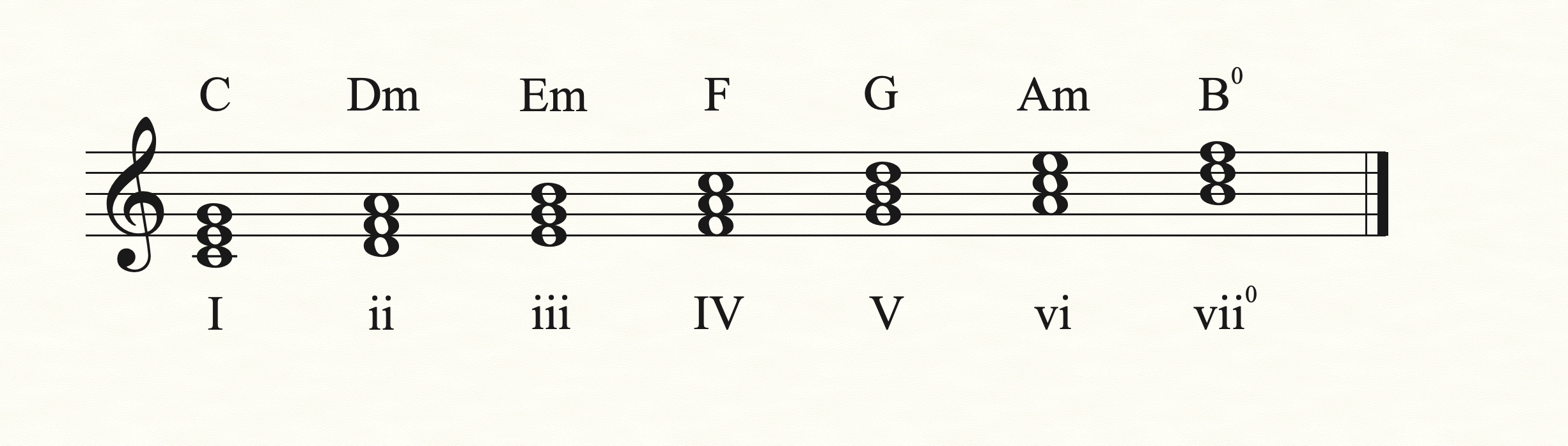
A chord may be built on any note of the musical scale. Therefore, a seven-note diatonic scale allows seven basic diatonic triads, each degree of the scale becoming the root of its own chord. Music theorists have denoted chord progressions using Roman numerals. The following is the quality of triad based on the C major scale:
In the movement from one chord to the next chord (chord progression) there emerges a common practice in musical composition that has proven to be structurally pleasing to the listener. The most common practice is a progression of four chords. The following are the most common chord progressions in harmonic music:
I V I
I IV I
I IV V
I IV V I
I V vi IV
I vi IV V
The last two chords of a chord progression are called a cadence. This cadence is most often associated with the ending of a musical phrase. The most common cadence is an authentic cadence (V, I) where the dominant triad (based on the 5th tone of the scale) is followed by the tonic triad (based on the 1st tone of the scale). This cadence is also known as the “Perfect” cadence.
The next most common cadence is a plagal cadence (IV, I) where the subdominant (based on the 4th tone of the scale) is followed by the tonic triad (based on the 1st scale degree). The plagal cadence is often referred to as the “Amen” cadence.
Four-Part Harmony
In vocal music, four-part harmony refers to music written for four voice parts. Because the human voice has a limited range, different voice types are usually not able to sing pitches that lie outside of their specific range. The four voice types from highest pitch to lowest pitch are soprano, alto, tenor, and bass. A four-part hymn is the most prevalent musical example of four-part vocal writing.